Finder Talks

Irlan Zanetti da Finder recebe Gilberto Vieira Junior da Vieira Santos Engenharia Integrada para um bate papo ao vivo sobre instalações elétricas inteligentes. Os engenheiros irão abordar como as soluções Finder agregam valor, facilidade e benefícios nas instalações elétricas, do projeto ao empreendimento finalizado. Com exemplos reais, verdadeios casos de sucesso desta parceria de longa data.

🗓️ Data: 01/07/2021 – quinta-feira às 19h
📍 Local: Ao Vivo | YouTube Finder Brasil
➡️ Link: https://youtu.be/jxQU1UI_Pug

Assista este bate papo que foi um sucesso!!!

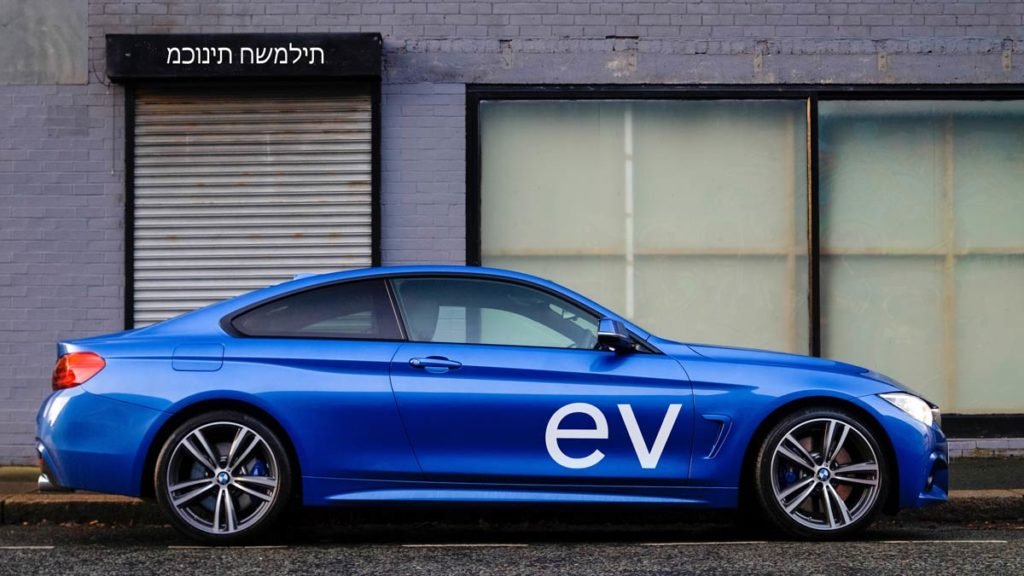
Israel revela planos de passar 100% dos veículos para elétricos até 2030

“A partir de 2030, os moradores de Israel não poderão mais comprar carros movidos a gasolina ou diesel, anunciou o governo israelense. Em vez disso, apenas carros elétricos estarão disponíveis para compra. É parte de um plano mais amplo para tirar Israel da dependência na gasolina, no diesel e no carvão, e dará início a uma “massa crítica” destinada a desviar o mercado automotivo local das vendas de carros da ICE. “

Qual é o aprendizado aqui? É que os governos desempenharão um papel enorme na transição do veículos à combustão para veículos elétricos nos próximos 10 a 15 anos. Países inteiros, como Israel, estão exigindo proibições futuras de veículos à gasolina e diesel, e um compromisso de se tornarem elétrico no longo prazo. 

Leia mais sobre em: https://thedriven.io/2018/10/10/israel-unveils-plans-to-go-100-per-cent-electric-by-2030/

Quer saber mais sobre carros elétricos?  Leia em: http://blogdosengenheiros.com.br/o-futuro-dos-veiculos-eletricos/

Acompanhe nossas redes sociais:
▶ Facebook: https://vseng.co/face-blog-eng
▶ Instagram: https://vseng.co/insta-blog-eng

Inscreva-se no canal do parceiro Vieira Santos:
▶ vseng.co/YouTube-VS

Philips Lighting anuncia solução LiFi que permite dados em banda larga através da luz

A Philips Lighting líder mundial em iluminação, acaba de disponibilizar a Light Fidelity (LiFi), uma tecnologia na qual a iluminação LED de alta qualidade proporciona uma ligação à Internet de banda larga através das ondas de luz. Sendo a empresa de iluminação da Internet das Coisas, a Philips Lighting é a primeira empresa global de iluminação a disponibilizar luminárias preparadas para a LiFi no seu atual portefólio de luminárias de escritório.

“O potencial da LiFi na atual era digital é enorme, e, enquanto empresa líder mundial na área da iluminação, orgulhamo-nos de sermos pioneiros na oferta de serviços novos e inovadores aos nossos clientes”, afirmou Olivia Qiu, Diretora de Inovação, Philips Lighting.

“Ao contrário das frequências de rádio, que estão a ficar congestionadas, o espetro da luz visível é um recurso inexplorado, com uma grande largura de banda adequada à ligação estável e simultânea de um grande número e tipo de dispositivos da Internet das Coisas. Enquanto empresa de iluminação, garantimos que os nossos clientes desfrutam de uma luz de grande qualidade e eficiência energética, acompanhadas de uma conectividade da última geração.

Ligação à Internet de banda larga e iluminação de qualidade em simultâneo

A LiFi é uma tecnologia sem fios bidirecional e de alta velocidade semelhante ao WiFi, mas que utiliza as ondas de luz em vez das de rádio para transmitir dados. As luminárias de escritório da Philips Lighting dotadas da tecnologia LiFi garantem uma ligação de banda larga à velocidade de 30 Mb por segundo (Mb/s) sem comprometerem a qualidade da iluminação. A 30 Mb/s, os utilizadores podem transmitir vários vídeos com qualidade HD, em simultâneo e durante as suas videoconferências.

A Icade, uma empresa francesa de investimento imobiliário, está a conduzir um programa piloto desta tecnologia inovadora no seu escritório inteligente no La Defense, em Paris. “A LiFi é capaz de inovar radicalmente os escritórios. Enquanto líderes do nosso mercado, queríamos explorar as possibilidades desta tecnologia para os clientes atuais e futuros. Queremos demonstrar a tecnologia no nosso escritório inteligente no La Defense, portanto, e para além da conectividade estável, a qualidade da luz é crucial para nós”, afirmou Emmanuelle Boulin, Responsável pela Divisão de Investimento em Património Comercial da Icade.

Vantagens da LiFi

A LiFi tem vantagens em relação ao WiFi, porque pode ser usada em locais nos quais as radiofrequências possam interferir com o equipamento, como os hospitais, ou onde os sinais WiFi não tenham alcance ou potência suficientes, como no subsolo. Outros exemplos de utilização incluem ambientes que exijam segurança elevada; por exemplo, a secção administrativa de uma instituição financeira ou de um serviço estatal. A LiFi acrescenta uma camada adicional de segurança, uma vez que a luz não pode atravessar paredes sólidas e deverá estar sempre na linha de visão para se poder aceder à rede.

Como é que a LiFi funciona?

Todas as luminárias estão equipadas com um modem integrado que modula a luz a velocidades impercetíveis ao olho humano. A luz é detetada por uma chave/dongle USB de LiFi, ligada à tomada ou porta de um computador portátil ou tablet (esta tecnologia deverá vir a estar incorporada nos computadores portáteis e demais dispositivos). O dongle USB (ou chave anticópia) de LiFi passa os dados à luminária através de uma ligação de infravermelhos. Graças às luminárias Philips preparadas para a LiFi, os clientes beneficiam da dupla vantagem de terem uma boa luz LED energeticamente eficiente e uma ligação altamente segura, estável e robusta, uma vez que a LiFi possui um espetro 10 000 vezes maior que o do WiFi.

Porquê Usar a LiFi da Philips Lighting?

https://www.youtube.com/watch?v=e0XxTiThgVo

Leia mais em: https://vseng.co/philips-lighting-fonte

Leia também:
Smart Home, IoT em sua Casa

▶ Facebook: https://vseng.co/face-blog-eng
▶ Instagram: https://vseng.co/insta-blog-eng

Inscreva-se no canal do parceiro Vieira Santos:
▶ vseng.co/YouTube-VS

SMARTFLOWER: Geração de energia fotovoltaica em formato de girassol

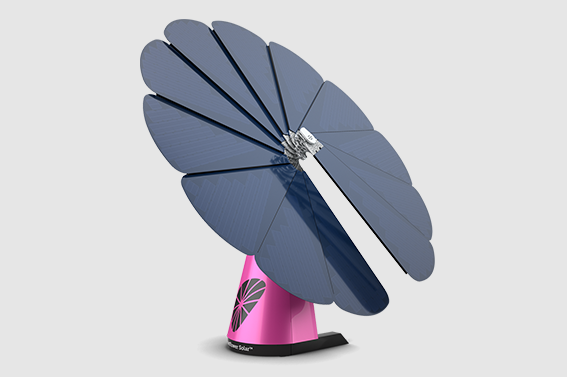
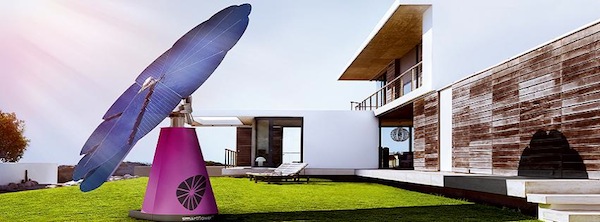
Una nueva especie floral austríaca se ha instalado en España para liderar el mercado del autoconsumo. Ayer se presentó en Madrid Smartflower, el primer sistema fotovoltaico ‘todo en uno’ del mundo. De fácil instalación, con sus 18 m2 de paneles solares móviles, esta tecnología es capaz de generar hasta 6.200 kWh/año, muy por encima de los 4.000 kWh de una vivienda media.

¿Quieres tener una flor fotovoltaica en el jardín de tu casa? ¿Y de qué color? La tecnología no está reñida con un diseño elegante y una idea original. Esa es la propuesta de la joven empresa austríaca que ha desarrollado Smartflower, un sistema fotovoltaico que sigue la trayectoria solar mediante un sistema de control astronómico que permite que sus paneles se sitúen siempre en un ángulo de 90º con respecto al sol. Gracias a ello es capaz de conseguir resultados óptimos en la generación de energía. Y todo de forma automática.

España, el país del sol

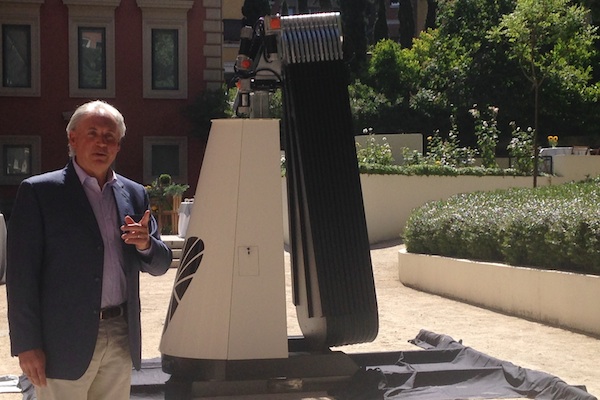
smartflower2El director de Smartflower en España, Julio Matilla, se preguntaba durante la presentación “¿por qué en una España como la actual no tenemos acceso a una energía limpia, gratis e ilimitada?”. Por su parte, Alexander Swatek, CEO y fundador de la compañía, añadía que “nuestra meta consiste en hacer posible que cada vez sean más las personas que puedan generar su propia energía limpia para el autoabastecimiento de su hogar”.

La instalación de Smartflower POPTM se realiza fácilmente en menos de una hora, porque está todo incluido en el producto: inversor, paneles solares y la conexión.

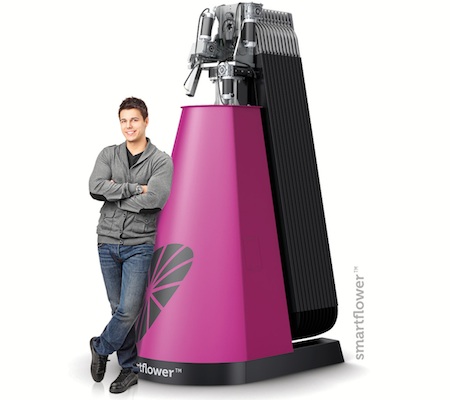
La flor fotovoltaica de 3,2 kWp se caracteriza por un diseño sencillo, eficiente y compacto, creado por los diseñadores vieneses GP Designpartners. Con sus 2,65 metros de altura y sus 750 kg de peso, la eficiencia y el diseño se aúnan en una atractiva y original configuración de paneles en forma de pétalos, fabricados con un vidrio que proporciona una larga vida útil y excepcional resistencia a las inclemencias meteorológicas. La producción estimada, en función del punto geográfico donde se instale, se sitúa entre los 3.400 y los 6.000 kWh/año. En el caso de Madrid, se calcula que alcance los 5.520 kWh/año.

Está específicamente diseñado para  seguir el movimiento del sol y, de este modo, optimizar la producción de energía.

Máxima energía solar

smartflower3“Es un seguidor del sol, pero se maneja como un GPS, sabe cómo aprovechar la energía solar, manteniendo los 90º exactos de inclinación al sol, lo que se traduce en un aprovechamiento del 100% de su capacidad”, continúa Matilla. Además, capta la máxima energía solar gracias a sus paneles monocristalinos y a un circuito de conexión inteligente que abarca todas las superficies de los paneles y módulos solares. Smartflower POPTM produce suficiente energía, incluso en las horas marginales del día, lo que aumenta de forma determinante su rendimiento. Esta innovadora instalación suministra energía limpia desde que despunta el día hasta el crepúsculo. Con la puesta del sol, la central solar se pliega automáticamente volviendo  a la posición de reposo.

Cómo conseguirlo

El producto ya se comercializa en España desde hoy mismo, con un precio neto alrededor de los 11.900 euros, se atornilla al solado o directamente a la tierra, pero es portátil, en caso de mudanza a otro lugar, es posible trasladar el sistema, sin complicaciones. Su rendimiento es un 40% superior al de las instalaciones fotovoltaicas que se instalan en el tejado.

Además, no tiene apenas mantenimiento porque cada vez que se despliega y pliega, smartflower POPTM se autolimpia de forma automática, eliminando el  polvo de  las placas, el cual reduciría la producción de electricidad, y cuenta con una excelente retroventilación al no estar apoyado en otra superficie, por lo que su refrigeración es un 10-20ºC superior a las instalaciones tradicionales sobre el tejado. Gracias a esta refrigeración, su rendimiento se incrementa entre un 5% y un 10% con respecto al de otras instalaciones.

Situaciones climatológicas adversas

Durante su funcionamiento, los sensores vigilan permanentemente la velocidad del viento. A partir de los 54 km/h, smartflower POPTM se repliega de forma automática para evitar posibles daños. En cuanto amaina el viento, la instalación se vuelve a desplegar, también de forma automática.

smartflower

Tome suas Vitaminas de Construção: certificação WELL e Projetos de Construção Saudável

Healthy buildings may be the breath of fresh air in the world of sustainable design. Green building proponents and practitioners increasingly promote healthy building outcomes. New certification programs, such as the WELL Building Standard, up the ante. A building’s health may soon become a common conversation with clients.

The U.S. Environmental Protection Agency (EPA) estimates Americans spend 93 percent of their life inside (87 percent indoors and 6 percent in automobiles). Is it any wonder a healthy building movement would emerge? Researchs shows the impact of buildings on human health. Green building certifications that address thermal comfort, indoor air quality and lighting already improve building occupants’ health. WELL goes further.

“LEED set out a baseline for how green building practices can improve the health and wellness of a building’s occupants, including access to daylight and outdoor views, active design, improved air exchange, and better materials choices,” said Rick Fedrizzi, founding chairman and former CEO of the U.S. Green Building Council and chairman and CEO of the International WELL Building Institute (IWBI).

WELL addresses seven concepts related to the health and wellness of building occupants: air, water, nourishment, light, fitness, comfort and mind.

“As human health and wellness can impact everything from stress levels to alertness to productivity, it is no surprise building owners, developers and corporate tenants are now incorporating design and construction elements that positively contribute to people’s health,” Fedrizzi said. “We and others believe this helps attract and retain talent, lowers absenteeism, and potentially improves overall human well-being.”

Lighting in particular can have a profound effect on building occupants and is a key element of WELL.

“Light is the primary driver that aligns our body’s biological clock with the sun’s 24-hour day,” Fedrizzi said. “Circadian lighting provides optimum light exposure for different times of day, such as energizing light in the morning and an evening ambiance that prepares the body for rest and, therefore, can help improve one’s energy, mood and productivity and overall sleep quality.”

The building community takes note
An emphasis on healthier buildings has grown in recent years. In 2014, McGraw-Hill Construction (now Dodge Data & Analytics) produced its SmartMarket Report, “The Drive Toward Healthier Buildings.” Building owners, architects and contractors (among others) were interviewed to glean their market exposure and future role in healthy building design.

“The incentive for green building has been to keep buildings from doing harm to the environment,” said Donna Laquidara-Carr, industry insights and research director, Dodge Data & Analytics. “Now there seems to be a direction where buildings can actually enhance occupant health.”

In the report, some 47 percent of business owners attuned to building health reported healthcare-cost reductions between 1 and 5 percent. Sixty-six percent saw improved employee satisfaction and engagement while 56 percent saw lower absenteeism. Finally, 21 percent reported higher employee productivity. The contrast lies in the remaining respondents, who didn’t know if they saw any change.

Seeking measurements and data
“What’s lacking is actual data tied to results,” Laquidara-Carr said. “There’s no true tool to measure rate of return on healthy building investment; not a lot of measurement is going on at this point. Owners often evaluated building health based on employee comfort complaints. To me, this illustrates the real need for greater tools that can capture a fuller picture of building health beyond issues of thermal comfort.”

Owners, architects and contractors favored a return on investment that showed greater worker productivity and satisfaction. Contractors also would factor in reduced healthcare costs. Beyond better data, contractors and owners said they need to see a demand in healthy building. Locales with stringent codes are possible triggers.

“Owners also felt there just wasn’t enough contractor expertise in healthy building,” Laquidara-Carr said. “It was learn as you go. Adding WELL-accredited staff could be a way to address this need.”

A WELL project tests a design team
The American Society of Interior Designers (ASID) opened its new Washington, D.C., headquarters in May 2016, calling it “a living laboratory.” Designed with optimum sustainability in mind, it earned Leadership in Energy and Environmental Design (LEED) Platinum certification. Occupant health is an equal concern as ASID hopes to also achieve WELL Platinum.

“The 8,500-square-foot office includes biophilic design (engaging nature through natural light, vegetation, and organic forms and materials) to reduce stress and promote health; enhanced air quality; stringent water quality standards; and a lighting system that is both efficient [and] helps to regulate the body’s circadian rhythms,” said Ken Wilson, principal in Perkins+Will’s Washington, D.C., office.

David Cordell, senior associate and senior technical coordinator, Perkins+Will, served on the project and navigated his deep understanding of LEED with his new WELL-AP training.

“LEED and the Living Building Challenge have paved the way to think about indoor air quality, light quality and material health from the built environment,” Cordell said. “WELL takes these things to a new level with 100 features aimed at elevating the health quality in a building. LEED is bricks and mortar and building efficiency. WELL is operational protocols. Occupancy behaviors are especially important in WELL. You can’t certify if you don’t buy into it.”

While a construction design team applying LEED analyzes a building to discover sustainability solutions, WELL might add other voices. In the ASID project, the input of the building landlord and other tenants was sought.

“ASID moved from a building they owned to a fit-out office space, making them one tenant out of many in a building,” Cordell said. “So the challenge was how do you proceed to earn WELL certification in isolation of other building tenants? Working with shared mechanical systems and water filtration in core restrooms were just two areas to be resolved, which we did.”

Internalizing light
ASID added a Lutron Quantum Control circadian lighting system that can recognize geographic location, the time, date and the 24-hour natural lighting patterns of the day.

“We start the day with cooler white light (5,000K) that is brighter and more intense,” Cordell said. “Light levels dim a bit as the day wears on and the light warms (2,700K). This creates psychologic changes. One has more energy at the start of the day. As the day draws to a close, the attending light is quieting your body.”

Open areas of the office feature fluorescent fixtures with warm and cool-colored tubes that run on dimming drivers and are activated at the appropriate time of the day. Color-changing LED lighting is featured in the offices, collaborative areas and corridors.

“To register circadian benefits, you need more light entering the space,” he said. “To avoid glare on computer screens and other surfaces, we bounced light from walls and ceilings and generated as much ambient light as possible. The long, rectangular shape of the office places most conference and office spaces no further than 20 feet from windows and natural light.

“WELL did have some trade-offs with LEED when it came to energy performance in this project. For us, the circadian control system was not always the most energy-efficient. The carbon filtration system also required more power to push air through, so we lost some efficiency there, too,” Cordell said.

IWBI recently introduced several WELL “crosswalks” to streamline the certification process for buildings registering under multiple programs including LEED, Green Star and the Living Building Challenge, Fedrizzi said.

Similar to LEED, Cordell’s team submitted required documents dictated by WELL, received comments back and then responded. The team scheduled the on-site review, a major component of WELL. Program certification is valid for three years and recertification is required.

“WELL isn’t this altruistic effort,” Cordell said. “The Centers for Disease Control cites $153 billion is lost annually in the U.S. through reduced productivity due to chronic illness. The World Health Organization says 20 percent of individuals’ health status is based in the quality of their environment. Theoretically, if we could make 20 percent healthier with good interior building health, that’s $20 billion brought back.”

Fedrizzi added to this idea.

“The benefits that come with healthier, more productive employees far outweigh the one-time costs,” he said. “Fortune 500 companies spend, on average, $700 per employee, per year on (fractured but well-intended) wellness programs whose impact is hard to quantify. WELL delivers immediate and measurable benefits for every employee. We break that down to a one-time, $100 per employee. That’s significant.”

While WELL certification can be expensive, a number of early projects are proving otherwise.

“[In February], the first project in New York City achieved WELL Certification, and they were able to do so for less than $1 per square foot,” Fedrizzi said. “Given WELL is still young, this low-cost achievement is very encouraging and underscores the fact that WELL building decisions are not necessarily more costly decisions, but simply more conscientious ones. Many other early projects have also achieved certification at this low-cost level.”